
How I learned to stop worrying and love long-form video
Going behind the scenes of aiEDU Studios, and down a historical rabbit hole

Today week, aiEDU Studios dropped the first episode of our new series, Raising Kids in the Age of AI. It’s produced in collaboration with Google and co-hosted by Dr. Aliza Pressman, the NYT bestselling author of The 5 Principles of Parenting.
Over 10 episodes, the series will help parents dive into the biggest questions about what AI means for their kids — everything from how AI can help cultivate and feed curiosity about the world, to the challenges that young people will have to navigate as they increasingly interact with AI companions, tutors, and mentors both in and out of the classroom. It’s a learning journey featuring conversations with a diverse mix of experts:
Philip Colligan, CEO of the Raspberry Pi Foundation
Shantanu Sinha, General Manager of Google for Education
Maya Kulycky, a Research VP of Strategy & Operations at Google
Lila Ibrahim, COO at DeepMind
We’ll explore how parents are teaming up with their kids to co-create with AI, some of the latest research into the best ways to integrate AI in the classroom, and glimpse into the latest thinking about how to help kids tackle the biggest challenges that AI will pose.
This is our first ‘legit’ podcast series. As proud as I am of what our team has been able to put together so far, we had the chance to work with pros at Kaleidoscope for Raising Kids in the Age of AI and it’s been incredibly humbling to see how much goes into creating the style of shows that first drew me into podcasts — the likes of Serial, Radiolab, and This American Life.
Kaleidoscope is a podcast studio that burst onto the scene a few years ago and has joined the echelons of AAA podcast houses like Wondery and Gimlet Media. Founded by veterans from VICE, iHeart Radio, and MTV, Kaleidoscope carved out a reputation for ambitious storytelling, editorial rigor, and immersive production. They have a bunch of top-rated shows, but I think my favorite is The Last Soviet, which tells the story of cosmonaut Sergei Krikalev who was stranded in orbit aboard the Mir space station as the Soviet Union collapsed beneath him. It’s a tale of human resilience, geopolitics, and the scientific community that brings you back to a time in the not distant past when the world came together.
We’ve been working on Raising Kids for the better part of six months, and with the show’s launch just a few weeks away (plus two 11-hour flights), I wanted to take the opportunity to talk about why we set out to build aiEDU Studios, along with some reflections on what I’ve learned along the way.
But first, I’ll get in trouble if I don’t urge you to subscribe to aiEDU Studios on YouTube, Spotify, Apple Podcasts, or wherever you get your podcasts. 😅
Why start a video podcast?
There are an estimated 4.5 million podcasts, and north of 100 million YouTube channels worldwide. By all accounts it’s a really, really hard time to throw your hat in the ring unless you’re Conan O’Brien or Bill Simmons.
Yes, the podcast market is oversaturated — but you know what? So is every other form of content. Nonprofits looking to leverage communications and content to get their message out to a wider audience don’t have many good options.
Blogs? There are 7.5 million new blog posts published every day. Earned media coverage? Amazing if you can swing it, but journalists are fickle and these days you are competing with a political and geopolitical environment that is generating a near constant deluge of stories that preoccupy editorial departments (which are themselves shorter staffed than ever). Social media? Obviously yes, but in 2025 “social media” is less a channel than a description of the entire media ecosystem (more on that in a bit).
Granted, aiEDU does all of the above. Over the last year, we ramped up to a weekly cadence of blog posts, press releases, social (mostly LinkedIn), and more earned media stories than ever. I’ll leave it to others to weigh in on the quality of that content, but I know that given our budget and relatively niche audience, we are doing a pretty damn good job — I should hope so, since one of our board members used to run the Washington Post and Wall Street Journal.
And yet, despite aiEDU’s success across the bread and butter of nonprofit communications, we had a gap. In fact, we were utterly failing to communicate via the single most dominant form of media consumption: video.
An abridged history of “new media”
I can’t think of anyone who better illustrates the dramatic upheaval from streaming video than John Townsend.
John Townsend runs Jas. Townsend & Sons, from his home in Pierceton, Indiana, a small town with fewer than 1,000 residents about 126 miles from Indianapolis. Townsends supplies 18th century reenactment supplies, clothing and accessories. His father was a passionate historical reenactor, and John took up the family business. In 2008, John launched the Townsends YouTube channel to create instructional videos for the products he sold, providing customers with a more practical, visual guide than could be offered by phone or text.
To John, this was a hobbyist pursuit — a side project to experiment with new ways to engage customers and support his humble small business. Without realizing it, he would become a pioneering innovator at the center of what would become the dominant media format over the next decade: creator-driven online video.
I’d wager you have never heard of the Townsends YouTube channel. Their videos include recipes for ships biscuits, roasted onions, and portable soup, the latter being a tough, dried sheet the consistency of soft plastic that pioneers like Daniel Boone packed on their journeys into the American wilderness. For the most part, these aren’t recipes for your next dinner party. Townsends scours archives to find authentic recipe books from the 18th century, then follows them to the letter. Ships biscuits, for example, are rock-hard chunks of dehydrated bread designed to keep over long trans-ocean voyages.
Why am I talking about the Townsends YouTube channel? Because it has nearly 3 million subscribers. That’s more than the channels owned by the Washington Post, Time Magazine, PBS, NPR, E! News, Rolling Stone, The Atlantic, Fortune, and Fast Company. Townsends’ recipe for roasted onions (literally just putting an onion in the oven for a couple hours) drew more views than a typical episode of Saturday Night Live.
How we got here
Americans now spend twice as much time on digital media than all traditional (TV/radio/print) media combined. In 2025 streaming video crossed a milestone: it now accounts for more TV viewership than cable and broadcast combined.
YouTube has 2.5 billion monthly active users. TikTok has 1.6 billion. Instagram has 2 billion. And we’re still experiencing the early crest of a decade-long wave as younger generations enter adulthood: 91% of Gen Z and 86% of Millennials prefer video over all other media formats, especially on mobile.
This was a long time coming. The media landscape has been steadily shifting ever since the dawn of the internet age. It fundamentally came down to infrastructure. Video files are cumbersome, and streaming video was largely a fantasy until the widespread adoption of broadband in the early 2000s.
Broadband was the inflection point. As bandwidth increased along with reliability, the technical barriers in front of video disappeared, and you saw the launch of companies that today dominate the entertainment landscape:
Hollywood and cable TV were indeed the first to reckon with disruption from streaming video. Box office revenues fell 17% in the years that followed the launch of the above streaming platforms. Netflix alone draws in more revenue than the entire global box office combined ($37.5 billion vs. $30 billion, respectively). 70% of adults now report streaming as their default way to access TV and video. Today, streaming accounts for nearly 45% of all TV viewing, more than the combined total for cable and broadcast TV.
Beyond the entertainment industry, traditional print media began reckoning with the sudden rise of a new generation of digital media companies in the early 2010s.
Investors poured hundreds of millions into publishers like BuzzFeed and VICE, which were framed not as media outlets but as scalable tech platforms poised for exponential growth. This investment thesis, which prioritized user scale over profitability, created a relentless pressure to generate massive traffic numbers. To achieve this, these new media darlings entered into a Faustian bargain — they built their entire business models on the algorithmic news feeds of social media, particularly Facebook.
This worked initially. We all remember those damn listicles. Around 2015, Facebook began pivoting to what Mark Zuckerberg declared a “new golden age of video,” and publishers rushed to restructure their operations. Believing video was the future of content, (and of lucrative advertising) media companies laid off scores of writers and editors to fund expensive video production departments.
This industry-wide upheaval, however, was built on a foundation of fraudulent data. It was later revealed in a class-action lawsuit that Facebook had been knowingly and massively inflating its video viewership metrics for over a year, in some cases by as much as 900%. Publishers lured by these deceptive numbers and the promise of higher ad rates had been pressured into gutting their core competency (written journalism) to chase a phantom audience for a format that was never as popular as claimed.
The consequences were devastating and lasting. Having bet the farm on misleading metrics, publishers saw their own website traffic plummet and their primary product hollowed out.
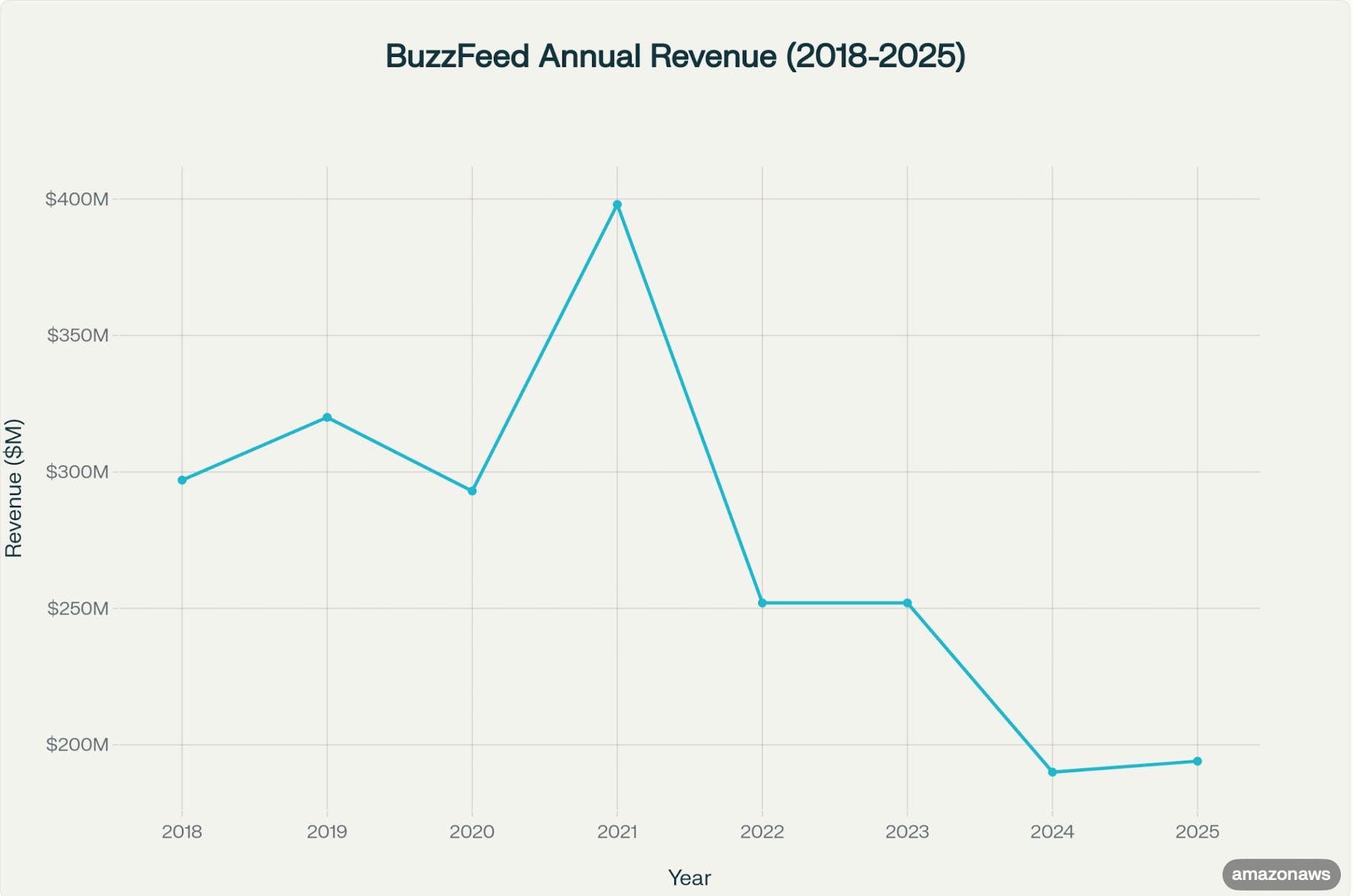
As layoffs mounted to stave off losses, the video creators who had built these companies’ most popular shows realized that they could make significantly more money by launching their own channels, and began peeling off to do just that. YouTube began to see more and more independent content creators professionalizing. Budgets got bigger and competition increased, gradually transforming YouTube from a way to search for funny cat videos to a destination for media consumption.
Parallel to the rise of streaming video, the world of gaming was experiencing its own renaissance. Online multiplayer games likewise benefitted from growing bandwidth and amassed gargantuan followings:
League of Legends launched in 2009 had accumulated 11 million monthly active players by 2011; 67 million by 2014.
Dota 2 launched in 2013, and by the end of the year had more than 10 million monthly active players, reaching peak popularity in 2015 with 25 million monthly players.
Fortnite launched in 2017 and reached 125 million players in less than a year.
PUBG: Battlegrounds sold 70 million copies on PC/console and reached 1 billion downloads on mobile by early 2021.


The massive player bases for these games created a fertile ground for a new kind of celebrity: the professional streamer. On platforms like Twitch and YouTube, creators built personality-driven empires with audiences that rivaled major media outlets. At the height of the Fortnite craze, Tyler "Ninja" Blevins became the first Twitch streamer to surpass 10 million followers. On YouTube, Félix "PewDiePie" Kjellberg became a global phenomenon as the first individual creator to reach 100 million subscribers (he still has one of the largest YouTube channels in the world). This fueled the video content flywheel, rewiring media consumption habits for an entire generation and solidifying video’s role as a central pillar of youth culture.
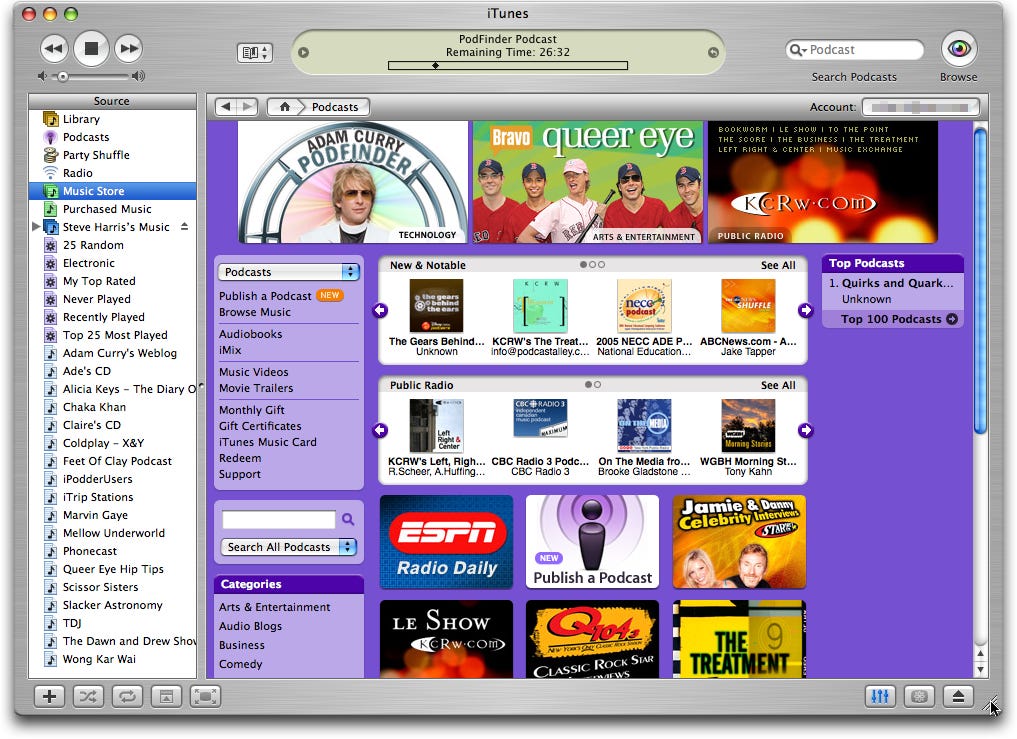
Another medium was quietly reaching a tipping point. The term "podcast" was coined in 2004, but for a decade, the format grew slowly. That changed in 2014 with the release of "Serial," a true-crime series that became a cultural phenomenon and created a breakout moment for the entire industry. The increasing ubiquity of smartphones enabled seamless mobile listening, and by 2020, podcasts had achieved mass adoption. The COVID-19 pandemic was a timely accelerant, and by the end of 2021, 41% of Americans listened to podcasts monthly, up from just 12% a decade prior.
As podcasts went mainstream, so did professional video capabilities. In 2013 Sony released the A7 and A7R mirrorless cameras, which proved capable of capturing professional-quality video for a fraction of the price of cinema camera rigs.

Advances in LED technology made professional lighting affordable. And smartphone cameras improved dramatically, offering 4K video and software enhancements. By the late 2010s, the barrier to entry for high-quality video production had all but disappeared.
Nobody capitalized on this convergence more than Joe Rogan, who began filming his extensive conversations for The Joe Rogan Experience, and uploading the full videos to YouTube in 2015. What followed was nothing short of meteoric growth. By the time he signed an exclusive three-year licensing deal with Spotify for $200 million, Rogan had amassed 190 million monthly listeners and individual episodes were regularly hitting between 5-10 million views on YouTube. That’s on par with the most popular cable television shows:
The Tonight Show Starring Jimmy Fallon: 2 million viewers per night
The Late show with Stephen Colbert: 3 million viewers
Tucker Carlson Tonight: 4-5 million viewers
Rogan was handily beating flagship linear TV shows, but more importantly, he was doing it at a tiny fraction of the production cost — likely less than 1% of the cost per show.
Joe Rogan’s success became a sign post for the more than 1 million podcast creators who realized they could massively expand their audience with the simple addition of a couple cameras and some lighting (which, thanks to the above technology developments, were easily acquired). Alex Cooper, Logan Paul, Lex Fridman, John & Hank Green, Andrew Huberman, Peter Attia, Tim Ferriss, Chris Williamson, and Rich Roll followed the same format to success, attracting millions of subscribers of their own.
Stand-up comics also rode the wave, being uniquely gifted in the art of turning unstructured banter and storytelling into entertainment. The likes of Theo Von, Tom Segura, Bert Kreischer, Bobby Lee, Andrew Santino, Tim Dillon, Tony Hinchcliffe, Bill Burr, Mark Normand, Stavros Halkias and Sam Morril all developed massive followings for their video podcasts, thanks in part to appearances on Rogan’s podcast which became a king-maker for YouTube stardom in the same way that an appearance on The Tonight Show Starring Johnny Carson was for previous generations of comics.
Comedians helped to broaden YouTube’s appeal beyond its initial core of gamers, tech enthusiasts, and viral videos. They introduced storytelling about everyday life, attracting a more mainstream, often older, demographic. They helped legitimize the platform as a primary entertainment destination, proving it could compete directly with traditional media like talk radio and late-night television.
Of course, so far we’ve only told the story as it applies for a slice of YouTube’s total audience. There are similar stories for content built around the beauty, fashion, and lifestyle communities, with their own superstars like Michelle Phan, Zoella, Emma Chamberlain, Bethany Mota, and Jessica Ballinger. And then you have food influencers like Joshua Weissman, Maangchi, Mark Wiens, and Nick DiGiovanni. All of these channels have millions, many tens of millions, of subscribers.
I’m barely scratching the surface. I had intended to include a high-level taxonomy of the YouTube universe, but quickly realized that it would require another 6,000 words, so I’ll save that for a future writeup.
The 2024 election might have been online video’s watershed moment
Even if they themselves were avid consumers of YouTube or other video platforms, many people didn’t quite clock the seismic shift in the media landscape. By the early 2020s, video was no longer “new media” — it had become the central pillar of the entire media ecosystem.
Democrats were among those blindsided. For months, despite a drumbeat of bad media cycles, the Trump campaign consistently won in the polls. Nothing seemed to be moving the needle. Elections are complex, and it’s generally bad practice to boil the outcome down to a single strategy, but I think it’s safe to say that the Trump campaign’s “new media” strategy played a meaningful role. Replace “new media” with “media” and the statement: “Trump dominated in the ‘new media’ arena” suddenly takes on more gravity.


Trump made the rounds on shows hosted by some of the most popular YouTube podcasters, a strategy that yielded massive viewership numbers far exceeding those of traditional broadcast TV. His appearance on The Joe Rogan Experience shattered records, reaching 45 million views within a few hours. His other appearances also garnered tens of millions of views, including interviews with Adin Ross (2M+ views), Andrew Schulz (9M+ views), The Nelk Boys (5M+ views), Logan Paul (8M+ views), Lex Fridman (5M+ views), Patrick Bet-David (4M+ views), Shawn Ryan (2M+ views), and Theo Von (3M+views).
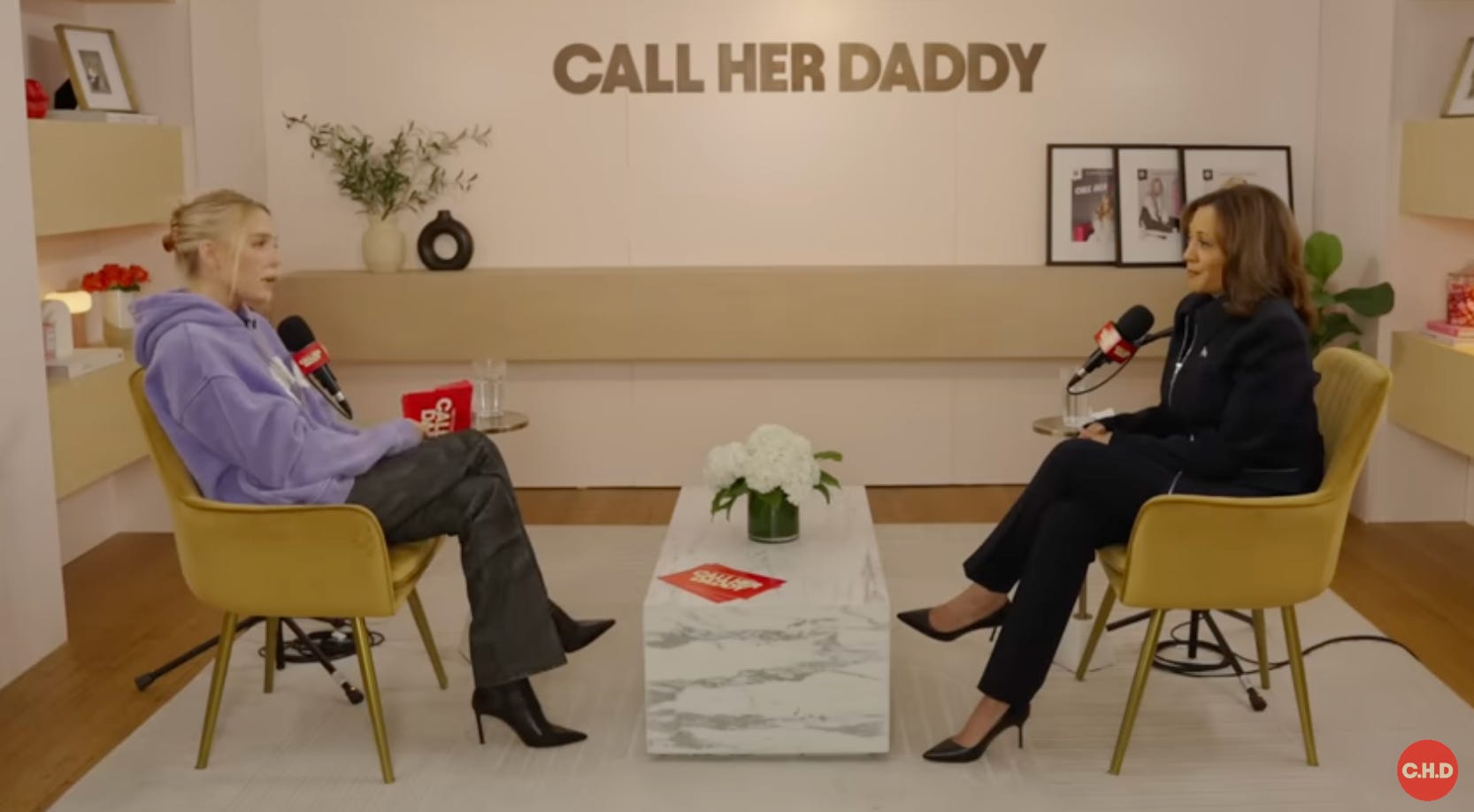
While Kamala Harris’s campaign didn’t entirely eschew YouTube, her appearances on Call Her Daddy and Club Shay Shay drew less than 9 million combined views — only a fraction of Trump’s Rogan interview. Harris had a far more traditional strategy with interviews on The View, 60 Minutes, and The Late Show with Stephen Colbert, but these broadcast appearances barely scratched the surface of Trump’s blockbuster podcast success.
The full impact of Trump’s long-form interviews extended far beyond their raw viewership numbers. Each multi-hour conversation was a content goldmine, immediately clipped by campaign surrogates, influencers, and supporters into hundreds of bite-sized videos for TikTok, Instagram Reels, and YouTube Shorts. The result was an amplification by an order of magnitude as the short, algorithmically-optimized clips reached tens (perhaps hundreds) of millions of additional viewers who didn’t watch the full interview. Trump also dominated these short-form platforms, with 3x more followers than Harris on TikTok and 5x more on X (formerly Twitter).
The stark contrast in online reach between the Trump and Harris campaigns, and the pivotal role these divergent strategies had in the last election, highlights the fundamental shift in the media ecosystem away from the insular print and broadcast media establishment which dominated for the last 100 years to a brave new world of independent creators and social video platforms.
The influence of traditional news media has been eroding for years. Global print advertising revenue dropped by nearly 40% between 2019 and 2024, and U.S. print circulation fell by 14% in 2023 alone. One could write a dissertation about the myriad reasons for this decline (many have). Digital disruption, especially from smartphones, led to changing consumer behaviors, which in turn created a doom loop that collapsed advertising revenue (print ad revenues fell 92% from 2000 to 2023).
Layered on top of these macro trends was the rise of personality-driven news media which shifted journalism away from institutional credibility to individual charisma. Anchors, commentators, and pundits became brands in themselves, cultivating loyal followings based more on interpretive frames, ideology, and personal style than fact-based reporting and journalistic integrity. It’s hard to say whether social media forced increasingly partisan shifts in mainstream news—or whether those shifts drove audiences to social media as an escape. But here we are.
Short form and brain rot
The story about the rise of video would be wholly incomplete without addressing short-form video.
By now, unless you’ve managed to delete virtually every social media app from your phone, chances are you’ve found yourself wasting away unknowable periods of time as hundreds of 15-second clips wash over you.
Here are some of the Reels I was served up when I opened Instagram just now. It’s what the kids are calling “brain rot.” That isn’t a fun euphemism. It’s purely descriptive.
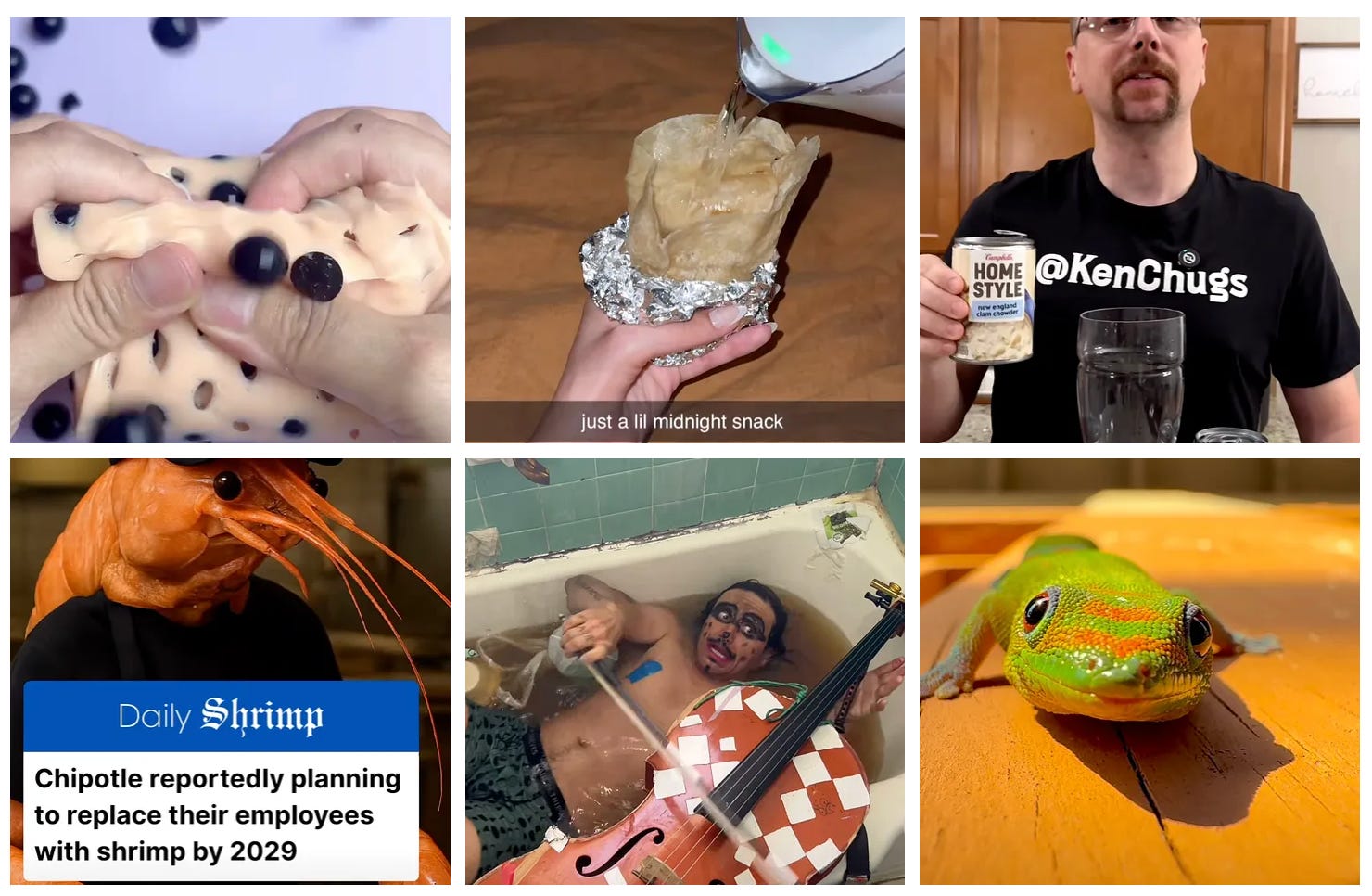
It’s impossible to describe the full spectrum of videos that encompass brain rot.
The dominant platforms for short-form video (TikTok, Instagram, and Facebook) incentivize creators to entice viewers for just a few seconds. Getting someone’s attention for 10-20 seconds is a very different endeavor from holding their interest for the length of a TV show or podcast. Views come not from loyal audiences, but the unknowable algorithm.
The result is an endless sea of truly random content. Everything from rage-baiting customer service arguments to oddly satisfying “power-washing porn.” Brain rot.
On platforms like TikTok and Instagram Reels, the user experience is driven by the algorithmic slot machine. You pull the lever (swipe up), and you get a variable reward. The feed is an endless, transient stream designed to keep you hooked on the next potential dopamine hit.
There are some claims that social media firms invested in a private research casino in Las Vegas to study and optimize slot machine design and broader human behavioral response in controlled, real-world conditions. Whether or not there is a secret gambling lab in Vegas, it’s widely known that companies for years have invested significant resources into improving slot machine technology, which has spilled over into mobile apps and games.
This is the ultimate realization of the Faustian bargain media companies made with Facebook’s algorithm a decade ago, supercharged with ever-larger mountains of user data and increasingly sophisticated machine learning. The goal is no longer to build a loyal audience around a coherent brand or personality, but to hijack the brain’s dopamine system for microseconds. Content is not crafted for an audience, it is engineered for the algorithm to reward whatever is most immediately stimulating, shocking, or satisfying.
It’s a race to the bottom of our brainstems.
The result is a media environment that is ephemeral by design, where trends and creators are disposable, replaced by the next 15-second hit. While John Townsend built a multi-million subscriber base over a decade through trust and expertise, a short-form creator can gain millions of followers in a week from a viral dance trend and be forgotten a month later (just ask Jake Kuhlman or Jools Lebron).
Choosing our format, and betting against the Slot Machine
Any communications expert will tell you that the first step in building a content strategy is to answer a simple question: “Who is your target audience?”
That isn’t a simple question for aiEDU. Our mission — advancing the human side of AI Readiness through systems change — doesn’t come down to any one group. We have to effectively engage with teachers, parents, students, education leaders, funders, policymakers, journalists, and business leaders. Creating segmented content for each of those audiences would require tailored strategies for virtually every single social media platform, and a far bigger team and budget than we currently have.
Even if we opted to go all-in and focus on a single audience segment, these groups aren't monolithic. Take teachers, for example. Older educators tend to prefer Facebook, while Instagram is increasingly popular among their younger colleagues. Data from before 2024 showed X (formerly Twitter) as the top social platform for educators, but there has been a sharp decline over the past 18 months. Meanwhile, LinkedIn, historically shunned by the profession, is gaining traction. Teachers alone are an incredibly complex, moving target. Add in the differing media habits of parents, students, and policymakers, and the challenge compounds.
You have to play to your strengths (and limitations). Despite the gargantuan audiences on Instagram and TikTok, aiEDU would struggle to generate the style of content that tends to succeed on those platforms. It takes a very special personality to be able to effortlessly hold up an iPhone and crank out compelling, organic selfie videos. It’s even harder to do so in a way that adheres to our brand and communication strategies (as fun as it would be to have an aiEDU prank show). Anything short of utter confidence and fluency with Gen Z risks coming across as inauthentic. (Or “cringe,” as the kids say.)
So we decided to bet on depth over breadth, community over virality, and opted to go all-in on YouTube. While short-form platforms are undeniably powerful for reaching massive audiences, they punish the type of informative and substantive content that we seek to use our communications and media strategy to share with audiences. YouTube is the only platform with the staying power for building a dedicated audience. If short form apps are a slot machine, YouTube is a library (albeit, a very weird, hip one).
The prominence of the search bar on YouTube (it is the second largest search engine after Google) makes it a destination for users intending to find answers, learn a skill, or dig deeper into a passion or hobby. A subscription on YouTube is a powerful signal of intent, creating a direct line to an audience that has actively chosen to engage with your content. This is where you build a durable asset: a library of content that can serve an audience for years, not seconds.
Long-form content, especially live interviews, is a hedge against the coming wave of generative AI. Something like half of TikTok posts are now created at least in part with generative AI (images, video, or synthetic voice-overs). While no doubt some users will either embrace or be oblivious to this onslaught of synthetic content, we’re predicting that there will be an increasing premium for authentic content — in the same way that people gravitated towards in-person experiences after the pandemic. While in theory any content you come across online could be AI-generated (and that’s an important posture of skepticism to take when encountering content), live interviews are the hardest to fake.
That doesn’t mean we are ignoring short-form video entirely. YouTube’s integration of Shorts into their mobile app provides channels with a powerful tool for growing their audience. Unlike on other platforms where a short video’s only purpose is to lead to the next short video, YouTube Shorts can act as a powerful discovery engine, enabling you to provide short snippets of a longer interview to spark curiosity that drives viewers to explore more in-depth content. We’ve seen this play out in the early innings of the launch of the aiEDU Studios channel, where our shorts are in many cases garnering 10-20x more views, and the best performing ones resulting in meaningful boosts to views on our full-length interviews. Eventually, I could imagine experimenting with Instagram Reels in the future in order to use it as a funnel to our full length videos. The key is to use short form video for brain teasers and to spark curiosity.
Rolling up our sleeves and getting into the studio
We landed on YouTube in part due to research and expert input that encapsulated the above, but also after years of experimentation with video strategy. In 2022, We secured a grant to create animated educational videos with associated lesson plans for AT&T (you can check them out here), and another grant from OpenAI in 2023 to create a short explainer series. The videos were impressive, but also far too expensive to continue building beyond the confines of the specific grants that we had secured. Moreover, pursuing additional restricted grants to create video content would have limited us to content that aligned with our funders’ priorities and squashed our creative freedom.
In a separate set of experiments, we hired video teams to capture action footage of our programs in action, initially with recordings of our summits in Hawaii and Cincinnati. Even though we went with local production teams, the cost was still high enough such that we’d be limited to only a handful of such videos a year.
That’s not enough. A statistical analysis of 1,000 YouTube channels found evidence that the number of videos were significant predictors of subscribers. Content volume, not just quality, is key.
We had set aside a relatively paltry budget of ~$50,000 for our first year of production, and decided not to hire any dedicated staff until we had some threshold of validation to justify making an additional investment. It was a fraction of what we’ve spent on past video projects. We needed a cost-effective, repeatable format.
This brought us to the video podcast. It’s not only dominant on YouTube, but it’s also the most efficient path to producing professional quality content at scale. Unlike dynamic, on-location shoots that require constant adaptation to new scenes and lighting as well as storyboarding and complex post-production, a podcast studio is a controlled environment. The magic is in its consistency: you only have to solve the complex puzzle of lighting, sound, and camera placement once.
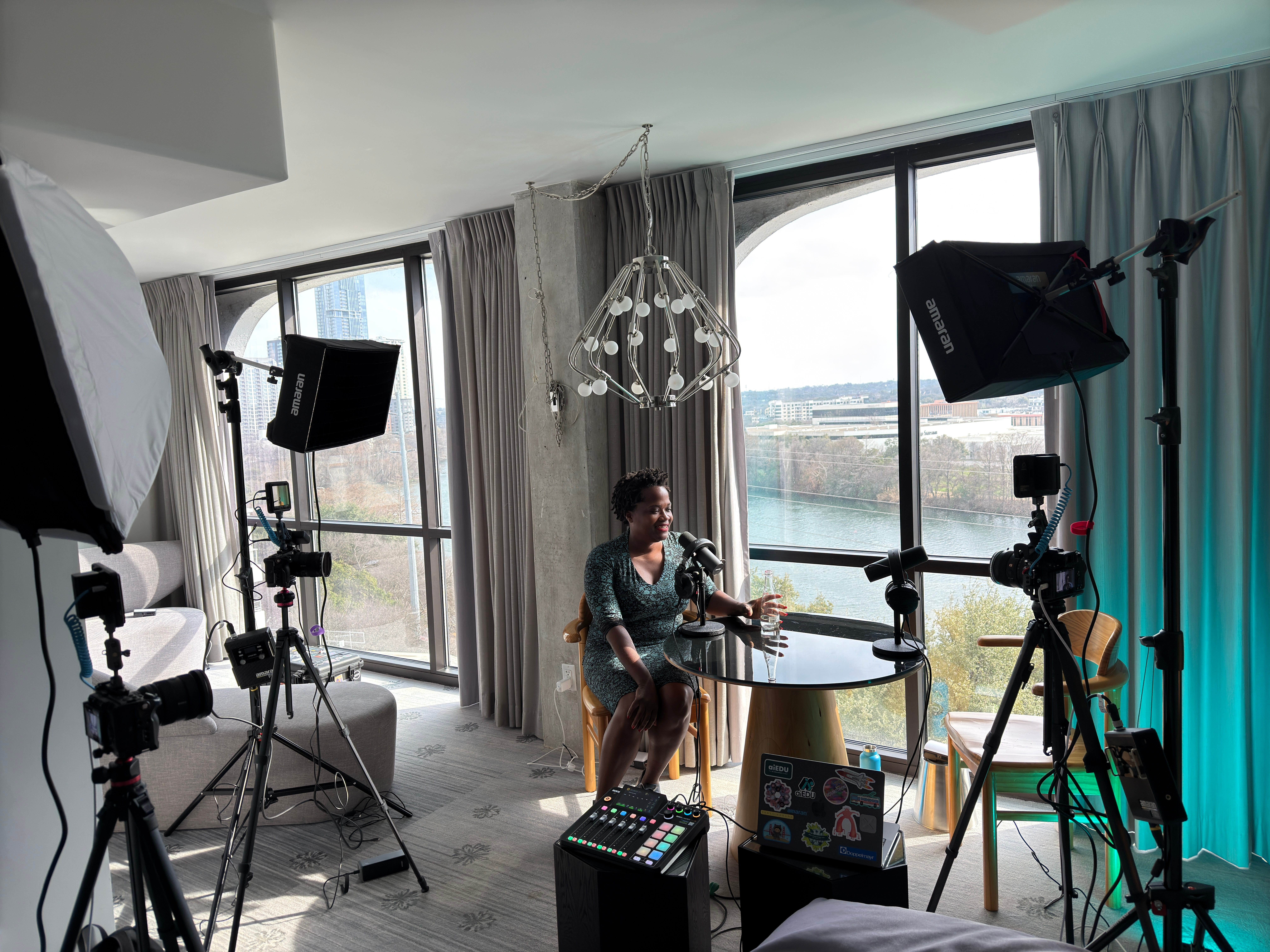
No one on our team had experience shooting video, but I’ve more than dabbled in professional photography and had a working knowledge of some of the tenets of videography. I had to get up to speed on professional lighting, which turned out to be the most important (and hardest) part of the equation. After a lot of research, trial and error, we landed on a solid studio setup that could be packed into two checked bags:
Audio: Shure SM7B dynamic microphones paired with a Rodecaster Pro II
Cameras: Two Sony FX30s and an A7R5 for a three-camera setup
Lenses: A trio of fast Sony G Master primes and zooms (35mm f/1.4, 50mm f/1.4, and 16-35mm f/2.8)
Lighting: An Amaran F22x key light two F21x fill lights, and four Ace25c RGB practical / accent lights
Storage: A fleet of 4TB hard drives and a 16TB RAID array to handle the nearly 300GB of files generated by each interview
Countless other accessories: cables, tripods, camera cages, monitors, capture cards, ND filters, a teleprompter, and did I mention cables?
Why go all out with the initial setup?
It’s true, anyone can start a podcast with nothing more than a laptop and Zoom subscription. That’s one of the challenges—anyone can start a podcast, and there are 4.5 million of them. You also aren’t just competing with podcasts. There are 10 billion videos on YouTube, and 93 percent of them have fewer than 1,000 views. 82 percent have fewer than 100.
Part of our strategy to break out of this obscurity was setting a relatively high bar for our MVP in terms of audio and video quality. Numerous studies underscore the importance of video quality to foster viewership and engagement. And until we cracked a few thousands subscribers, having a real studio would signal some legitimacy to potential guests who might otherwise raise their eyebrows at our minuscule subscriber numbers.
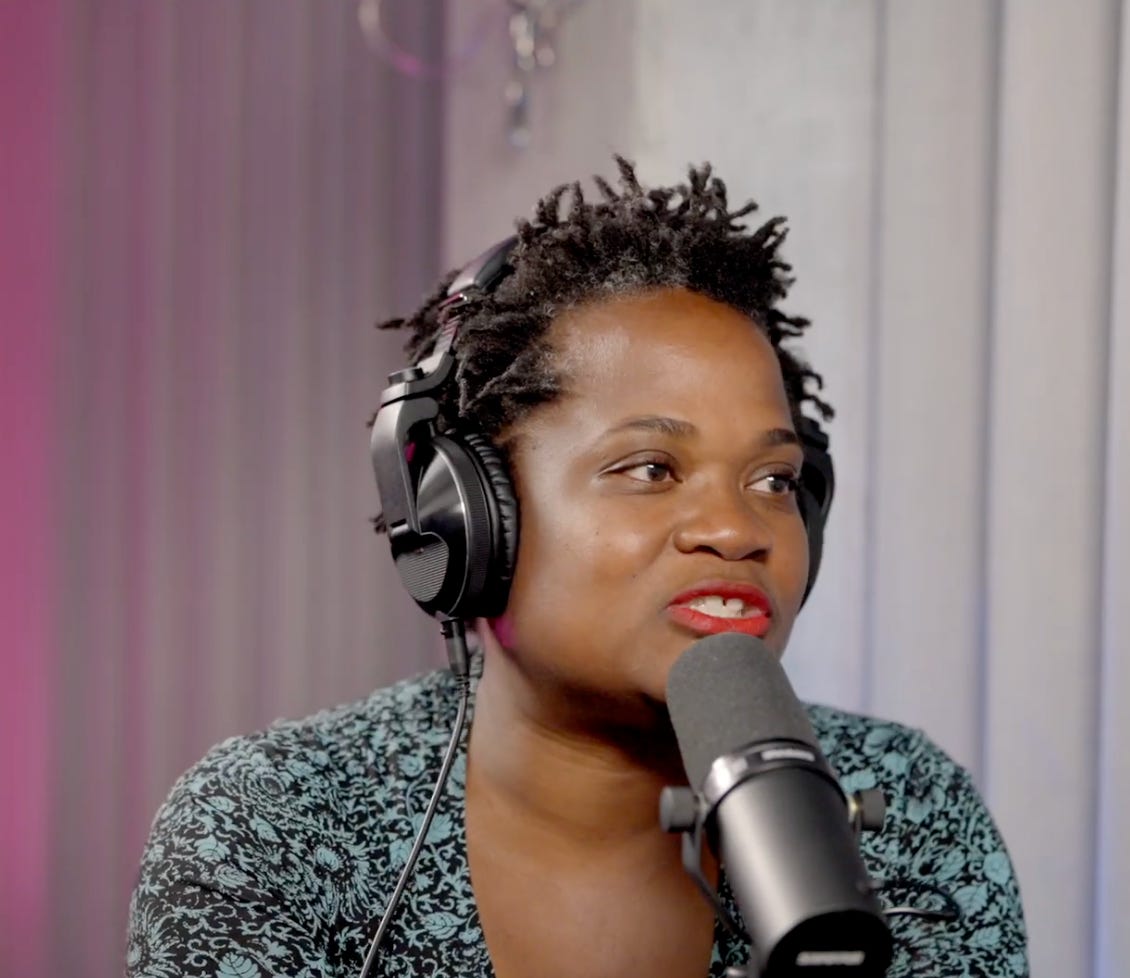
After lots of trial and error, we landed on a studio setup that worked. My interview with Shawna Young (pictured below) is probably the best out of our first dozen or so shows.
We’ve spoken to enough experts and done enough research to have a handle on what we need to do, but I’ll wait until we successful grow our channel to a few thousand subscribers before sharing a more complete ‘how to.’
What I will say is: Accumulating the gear and a working proficiency in production is the easiest part of the journey. You have to figure out a post-production workflow that can operate on a weekly cadence. You have to experiment with thumbnails (which are potentially even more important than the quality of your footage). You have to identify, pitch, book, and prep interesting and knowledgable guests, ideally working your way up to people that have their own online followings. You have to figure out your promotion flywheel, navigating other social platforms whose algorithms punish YouTube links. You have to build an engaged community. You have to do it all over again, week after week, without losing momentum, even when the viewership numbers are humbling.
As I write this post we’re sitting at about 350 subscribers. This isn’t even the first inning. We’re still in spring training.
Back to Raising Kids in the Age of AI
The extent to which launching a YouTube show is a long shot puts our project with Kaleidoscope in context. It was quite the coup.
There are a lot of factors that went into bringing the idea to life. But in short, we were building on our grassroots network and a strong following on other platforms like LinkedIn and Mailchimp, we launched our channel on solid footing with some great opening content, we had a compelling story to tell about AI Readiness, and we found ourselves in a brainstorm meeting about how to help parents better understand AI. Sometimes it helps to swing for the fences!
Raising Kids in the Age of AI will be a break from our unstructured long-form interviews, with clear story arcs to each episode, multiple guests, and active segues between me and my co-host, Dr. Pressman.
I’m incredibly excited about having marquee series produced with a renowned podcast studio to help us build out our channel. But I’m also clear-eyed that even ten really really good episodes with lots of promotion and fanfare won’t be enough to vault aiEDU Studios into stardom. It’s going to take time, consistency, and no small amount of tenacity and hustle.
Time will tell whether posterity will view this writing as the naive musings of someone who truly underestimated the size of the mountain he set out to climb. If I’m being honest with myself, that’s the most likely outcome. But maybe, just maybe, we’ll look back and marvel at having a chance to see behind the scenes of a nascent vision before it blossomed into reality.
You can help by subscribing to aiEDU Studios and commenting, liking, and sharing any of the episodes that resonate.